
CHSP Changes in 2026: What Providers Need to Know

The Commonwealth Home Support Programme (CHSP) continues to evolve as providers adapt to the new Aged Care Act, updated reporting requirements and changes to the way CHSP services are delivered and managed.
In August 2026, the Australian Government announced that CHSP will be extended for a further two years, until 30 June 2029, providing greater certainty for older people accessing entry-level support, as well as the providers and workers delivering CHSP services.
At the same time, recent changes and clarifications affect several areas of CHSP operations, including Data Exchange (DEX) reporting, My Aged Care information, wellness and reablement, worker screening, service delivery and provider governance.
For CHSP providers, these changes aren’t simply a reporting exercise. They affect the information organisations need to capture, how services are documented, how workforce compliance is managed and how providers demonstrate that they are meeting their obligations.
With CHSP now confirmed until 2029 and the latest Program Manual and DEX Stage 3 reporting requirements in effect, now is a good time for providers to review whether their systems and processes are keeping pace.
In this article, we’ll explore what the latest CHSP changes mean for providers, including:
- What the CHSP extension to 2029 means for providers
- Changes to CHSP DEX reporting
- New Transport reporting fields
- My Aged Care ID requirements
- Updates to the CHSP Program Manual
- Wellness and reablement requirements
- Worker screening obligations
- Governance and compliance requirements
- CHSP and Support at Home service delivery
- Practical steps providers should be taking now
- How technology can help providers manage changing CHSP requirements
What Does the CHSP Extension to 2029 Mean for Providers?
The Australian Government has confirmed that CHSP will continue until 30 June 2029, extending the program for a further two years.
The extension provides greater certainty for older people accessing entry-level support at home, as well as the providers and workers delivering CHSP services, including those in regional, rural and remote communities.
Importantly, it also changes the immediate reform horizon for CHSP providers.
Rather than moving directly into Support at Home in 2027, providers will continue operating under CHSP while the Government consults on the longer-term design of an entry-level program.
The Department of Health, Disability and Ageing has said the future program will aim to:
- be sustainable and better integrated with Support at Home
- ensure fair and equitable contributions to home care costs
- support early intervention services to reduce pressure on the broader aged care system.
For providers, the extension provides welcome certainty, but it does not mean CHSP is standing still. Current DEX, compliance and operational requirements remain important, while further refinements are likely as the longer-term model takes shape.
What Has Changed With CHSP DEX Reporting?
One of the most significant recent developments for providers is Stage 3 of the CHSP Data Exchange (DEX) changes.
Stage 3 introduces new session-level data fields designed to give the Australian Government greater insight into how CHSP services are being delivered.
Depending on the service type, these include:
- whether a session was delivered by a subcontractor
- whether a volunteer was involved in direct service delivery
- whether a service was delivered at home or in the community
- whether respite included an overnight stay
- additional information about meals
- engagement time spent with a client
- trip distance and travel time for Transport services.
The requirements vary according to service type.
For example, Individual Social Support includes new reporting fields covering subcontractor and volunteer involvement and whether the session occurred at home or in the community.
For Meal Delivery, the new fields provide significantly more detail about how services are delivered. This includes whether meals were cooked offsite, whether texture-modified items were provided, the type of meal delivered, service location and engagement time spent with the client.
Respite services also have additional reporting requirements covering areas such as meals, texture-modified items and, for Flexible Respite, service location and overnight care.
What does this mean for providers?
DEX compliance increasingly starts at the point of service delivery.
Providers need to ensure their systems and workflows enable the relevant information to be captured accurately and consistently so it is available when DEX reporting is completed.
That may mean reviewing digital forms, client records and staff workflows, as well as processes for services delivered by volunteers and subcontractors.
What Are the New Transport Reporting Fields?
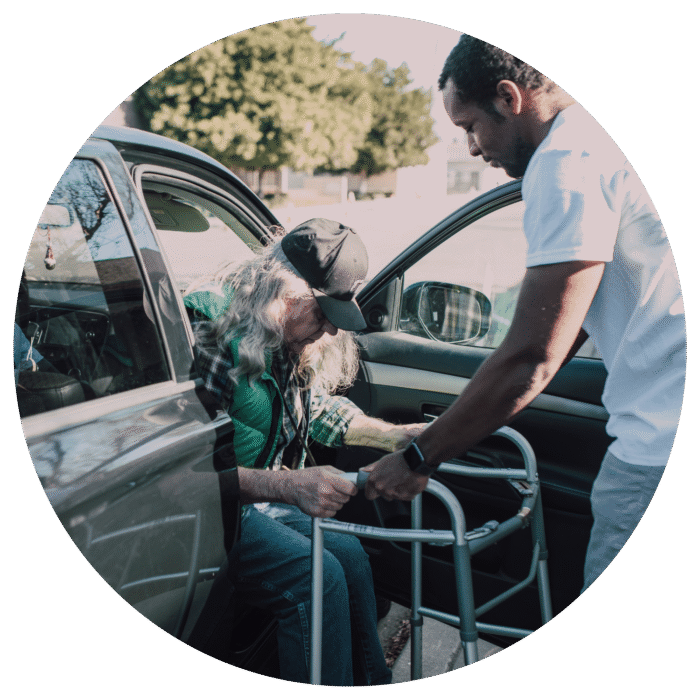
Stage 3 introduces additional reporting fields specifically for CHSP Transport services, including:
- session delivered by a subcontractor
- volunteer involvement
- engagement time spent with the client
- trip distance in kilometres
- trip travel time in hours and minutes.
The Government guidance makes an important distinction when defining trip distance and travel time.
Trip travel time is the time the client spends in the vehicle. It begins when the vehicle leaves the agreed pick-up location and ends when it reaches the agreed destination.
Similarly, trip distance covers the distance travelled while transporting the client. It does not include the worker or volunteer’s journey to collect the client.
For group transport, measurement starts when the vehicle leaves the first client’s pick-up point, continues through subsequent pick-ups and concludes at the final drop-off point.
The Transport-specific fields are currently not mandatory, but collecting and reporting this information will help the Department better understand CHSP service delivery and inform future government policy.
For providers, having systems capable of supporting this information now may help reduce manual administration and provide a stronger foundation if reporting requirements evolve further.
Why Are My Aged Care IDs Important?
My Aged Care (MAC) IDs are another important component of CHSP reporting.
MAC ID reporting became mandatory by 30 June 2026, with data entered into DEX without the required IDs no longer accepted.
Providers therefore need reliable processes for capturing MAC IDs within client records and maintaining the accuracy of this information.
This highlights why client information and reporting should not operate as disconnected functions. The quality of information captured and maintained within a provider’s digital system directly affects its ability to meet downstream reporting requirements.
What Else Has Changed in the CHSP Program Manual?
The updated Commonwealth Home Support Programme Manual 2025–27 includes a broad range of changes and clarifications affecting CHSP providers.
These cover areas including:
- client rights and supported decision-making
- service delivery requirements
- equipment and products
- home adjustments
- nursing
- gardening
- social support
- urgent services
- wellness and reablement
- provider responsibilities and governance.
The changes also include Cultural Support and Digital Education and Support under Social Support and Community Engagement.
Given the breadth of the changes, providers should consider reviewing the updated Manual against their existing policies, workflows, documentation and staff guidance rather than addressing each requirement in isolation.

What Are the Wellness and Reablement Requirements?
Wellness and reablement remain fundamental to the CHSP approach.
CHSP providers are required to have an implementation plan outlining how wellness and reablement approaches are embedded in service delivery.
This means providers need to be able to demonstrate how wellness and reablement principles are translated into everyday practice rather than simply referenced at a policy level.
Maintaining this documentation digitally can make the implementation plan easier to access, review and update while providing a central record of the organisation’s approach.
OneTouch can support providers to digitally document and maintain their wellness and reablement implementation plan, keeping this important documentation within the same centralised environment used to manage clients, care and services.
What Do Providers Need to Know About Worker Screening?
Workforce compliance is another area CHSP providers need to consider.
Updated CHSP guidance reinforces worker screening obligations, including requirements applying to volunteers.
Providers also need processes for regularly checking the banning orders register to ensure workers, volunteers, responsible persons and relevant individuals associated with associated providers are not subject to a banning order.
This creates an important workforce information management requirement, particularly for organisations coordinating a large or geographically dispersed workforce.
OneTouch’s HR and workforce management functionality can help providers centralise employee and volunteer records, capture relevant screening and compliance information, and maintain greater visibility of workforce requirements.
Technology does not replace a provider’s responsibility to undertake the required checks, but it can make the resulting information easier to record, manage and monitor.
What Are the Latest Governance and Compliance Requirements?
Updated CHSP guidance also reinforces a number of broader provider responsibilities.
Providers are expected to maintain accurate client and service information in My Aged Care, including ceasing referrals when appropriate.
There are also obligations around notifying the Aged Care Quality and Safety Commission of changes relating to responsible persons and maintaining appropriate oversight of associated providers.
Together with worker screening, DEX reporting and other requirements, these obligations demonstrate why compliance increasingly needs to be embedded into everyday operational processes.
Centralised records, clear workflows, reporting and audit trails can make it easier for organisations to maintain visibility of required activities and demonstrate accountability when required.

Can CHSP and Support at Home Services Be Delivered Concurrently?
Updated CHSP guidance provides further clarification around circumstances in which a Support at Home participant may also access CHSP services.
This includes conditions relating to areas such as urgent access and hoarding and squalor services.
There is also clarification regarding the Restorative Care Pathway. Participants may access both CHSP and the Restorative Care Pathway, although the same services cannot be provided under both programs on the same day, and restrictions apply to CHSP equipment and modifications.
For organisations delivering services across multiple programs, clear visibility of funding, service type and client eligibility is increasingly important.
Why Is Accurate CHSP Reporting Increasingly Important?
The CHSP Program Manual makes the potential consequences of failing to meet reporting and funding obligations clear.
Where a provider does not meet the requirements of its funding agreement, payments may potentially be delayed or withheld. Examples include failure to meet DEX reporting obligations, financial acquittal obligations or funded activity requirements.
Accurate reporting therefore starts long before a report is submitted.
Providers need confidence that information is being captured correctly during service delivery and that managers have sufficient visibility to identify missing or inconsistent information.
As reporting becomes more detailed, fragmented systems, spreadsheets and manual processes can make this increasingly difficult.
What Should CHSP Providers Be Doing Now?
While requirements will vary according to the services an organisation delivers, providers should consider reviewing:
- DEX data capture: Are the relevant Stage 3 fields incorporated into your service delivery processes?
- Transport data: If you provide Transport services, can you readily determine and record trip distance, travel time and engagement time?
- MAC IDs: Are My Aged Care IDs accurately recorded and maintained within client records?
- Service workflows: Do staff, contractors and volunteers know what information needs to be captured?
- Wellness and reablement: Is your implementation plan current, documented and readily accessible?
- Worker screening: Do you have clear processes for managing screening information for relevant workers and volunteers?
- Governance: Are client records, referrals, responsible person information and associated provider arrangements being maintained appropriately?
- Reporting: Can managers readily access the information they need to oversee service delivery, funding and compliance?
The objective should not simply be to add another administrative process every time a requirement changes. Wherever possible, compliance should be incorporated into the systems and workflows staff already use.
How Can OneTouch Help CHSP Providers?
OneTouch provides a centralised digital platform that brings together client, service, workforce, financial and compliance information, helping CHSP providers reduce administrative complexity and gain greater visibility across their operations.
DEX Reporting and Data Capture
OneTouch supports the capture of information required for CHSP DEX reporting, including updated CHSP service information, My Aged Care ID fields and relevant Stage 3 service delivery data.
Capturing the right information as part of everyday workflows can help improve data quality and make subsequent DEX reporting more efficient.
Transport Time and Distance
For CHSP providers delivering Transport services, OneTouch can help determine travel time and distance between pick-up and destination locations, reducing the need to manually calculate this information and supporting the capture of Stage 3 Transport data.
The Government’s definitions are specific about what should be reported: trip time and distance relate to the period during which the client is being transported, rather than travel undertaken to reach the client.
Centralised Client and Service Management
Maintain client records, care plans, agreements, service information and related documentation within a centralised platform, giving authorised teams access to a more complete and current picture of each client.
Individual and Group Service Scheduling
OneTouch enables providers to manage one-to-one services alongside recurring and one-off group activities, helping coordinate clients, services and workforce resources from one platform.
Workforce, Contractor and Volunteer Management
Coordinate the people involved in delivering CHSP services, supported by mobile functionality for teams working in the community.
OneTouch’s HR functionality can also help providers centralise workforce records and maintain worker screening and other relevant compliance information for employees and volunteers.
Wellness and Reablement Documentation
Use OneTouch to digitally document and maintain your wellness and reablement implementation plan, helping centralise this documentation and make it easier to access, review and update as organisational practices evolve.
Financial and Contribution Tracking
Monitor client contributions and funding allocations against contracts, with the ability to integrate OneTouch with broader financial management processes.
Real-Time Operational Dashboards
Real-time dashboards provide greater visibility across service activity and organisational performance, helping managers identify gaps and take action sooner.
Compliance, Incidents and Audit Trails
OneTouch supports incident management, mandatory reporting, documentation and audit trails within a centralised platform, helping providers maintain evidence and demonstrate accountability.
The benefits of bringing information together are demonstrated by McLean Care’s experience with OneTouch. After moving from four disparate systems and paper-based processes to a centralised platform, McLean Care reported improvements across rostering, reporting, payroll and access to client information.
Download the OneTouch CHSP flyer for more information.
Preparing for the Future of CHSP
The extension of CHSP to 30 June 2029 provides greater certainty for providers, workers and older people accessing entry-level support.
At the same time, the program will continue to evolve. The Government has signalled that its longer-term objective is an entry-level program that is sustainable and better integrated with Support at Home, with consultation on its design commencing in 2026.
For CHSP providers, this creates an opportunity to look beyond individual compliance changes and consider whether their underlying systems and processes are equipped for both today’s requirements and tomorrow’s model.
The immediate priority is ensuring current DEX, workforce, governance and service delivery requirements are understood and implemented. But there is also a bigger question:
Are your systems and processes flexible enough to adapt as CHSP continues to evolve?
A connected care management platform can help reduce reliance on manual processes, improve organisational visibility and make it easier to respond as reporting, compliance and service requirements change.
OneTouch helps CHSP providers streamline service delivery, strengthen compliance and build a flexible digital foundation for the future of community aged care.
Want to see how OneTouch can support your CHSP services? Book a demonstration with our team.
Frequently Asked Questions
How long has CHSP been extended?
The Australian Government has extended CHSP for a further two years, until 30 June 2029. The extension provides greater certainty for older people accessing entry-level support, as well as providers and workers delivering CHSP services.
What will happen to CHSP after June 2029?
The long-term model has not yet been finalised. The Government is consulting on the design of an entry-level program that is sustainable, better integrated with Support at Home, supports fair and equitable contributions and strengthens early intervention.
What are the CHSP DEX Stage 3 changes?
Stage 3 introduces additional session-level information across a range of CHSP services. Depending on the service type, this includes subcontractor and volunteer involvement, service location, meal information, respite information, engagement time and Transport data.
What are the new DEX requirements for CHSP Transport?
New Transport fields include whether a subcontractor or volunteer was involved, engagement time spent with the client, trip distance and trip travel time. The Transport-specific fields are currently non-mandatory.
How is CHSP trip travel time calculated?
According to the Government’s Stage 3 guidance, trip travel time begins when the vehicle leaves the agreed pick-up location and ends when it reaches the agreed destination. It does not include the worker or volunteer’s journey to pick up the client.
Can OneTouch help determine CHSP travel time and distance?
Yes. OneTouch can help determine travel time and distance between pick-up and destination locations, supporting providers to manage the additional Transport information introduced under Stage 3.
Is a My Aged Care ID mandatory for CHSP DEX reporting?
Yes. My Aged Care ID reporting is mandatory for CHSP DEX reporting, so providers need reliable processes for capturing and maintaining this information within client records.
Do CHSP providers need a wellness and reablement implementation plan?
Yes. CHSP providers are required to maintain an implementation plan outlining how wellness and reablement approaches are embedded in service delivery.
Can a wellness and reablement implementation plan be managed digitally?
Yes. OneTouch can be used to digitally document and maintain the provider’s wellness and reablement implementation plan, making it easier to centralise, access, review and update this information.
Do CHSP worker screening requirements apply to volunteers?
Yes. CHSP worker screening requirements include volunteers. Providers also need appropriate processes for checking the banning orders register for relevant people.
Can OneTouch help manage worker screening information?
Yes. OneTouch’s HR functionality can help providers maintain centralised employee and volunteer records and record relevant screening and compliance information. Providers remain responsible for undertaking the required screening and checks.
Does OneTouch support DEX?
OneTouch supports DEX reporting and the capture of required CHSP information.
Can OneTouch manage CHSP group activities?
Yes. OneTouch supports individual service delivery as well as recurring and one-off group activities, helping providers coordinate clients, services and workforce resources.
Can OneTouch support both CHSP and Support at Home?
Yes. OneTouch supports home and community care providers operating across different funding and service models, enabling client, service, workforce and operational information to be managed within a centralised platform.